
Matcha concept (Pearl Lemon Group)
Kemp House, 152–160 City Road, London EC1V 2NX, United Kingdom
Pearl Lemon took LeBell Cafe from an empty site to a trading coffee shop — concept, menu, equipment, staffing and launch delivered as one project.
Hospitality Concept Case Study — full concept build and launch delivered across the UK for a hospitality client in 2023.

LeBell Cafe · United Kingdom · 2023 · Full concept build and launch
Delivered by Pearl Lemon Experiences, the events division of Pearl Lemon Group.
Last reviewed 13 October 2026.
LeBell Cafe needed a coffee shop built and opened, not advice about opening one. That meant owning the concept, the menu, the equipment specification, the hiring and the launch as a single piece of work.
In short
Taking an empty site to a trading coffee shop means concept and menu first, then equipment and layout specified to the service flow, then hiring and training completed before opening day. The build has no fallback date, so the sequence is what protects the launch.
An event has a date and a defined end. A build has a date and then keeps going — the standard set at opening becomes the standard the business runs on for years, and everything decided early is expensive to change later. There is also no fallback. If crew are unavailable for an activation you find different crew; if the equipment specified for a fit-out is wrong, the counter has already been built around it. Sequencing therefore carries all the risk. Concept before menu, menu before equipment, equipment before layout, layout before hiring, hiring before opening. Teams that buy equipment early — because it has a lead time and feels like progress — end up designing the menu around the machines they happened to purchase, which is the wrong way round and shows up in the service flow every day the shop trades.
A permanent retail site brings a set of constraints an event never touches: landlord conditions, planning and change-of-use questions, extraction and drainage, utility capacity, accessibility, fire routes and food business registration. Equipment has real lead times, contractors have to be sequenced against each other, and inspections have to be passed before trading. Meanwhile the site is generating cost from the day the lease starts, so time is the most expensive variable in the project — which is exactly why decisions are made in the order that avoids rework.
Unlike an event, a venue build carries fixed costs from the day the lease starts. Every week of delay is real money, so sequencing matters more than perfection.
Specify equipment before the menu is settled and you buy the wrong machines. The order of decisions is the difference between a workable kitchen and an expensive one.
A new site opens to its harshest reviews. Crew must be at standard on day one, not week three.
We settled the offer before the fit-out so equipment, layout and staffing decisions all flowed from a fixed menu rather than being retrofitted to it.
The counter, machine positions and prep space were laid out around how drinks would actually be made at peak, not around the floorplan on paper.
Crew were recruited and trained so the site opened at its intended standard rather than learning in public.
The concept defined the customer, the price point and the daypart the shop was trading for; the menu followed from that. Every later decision — equipment, counter shape, staffing pattern — inherits from these two, which is why they were locked before anything was bought.
The counter was designed as a service line: each drink's build mapped to a physical path, with equipment positioned to minimise crew movement per order. A layout designed for how the space looks rather than how it works costs a few seconds per drink, which compounds into lost covers at every peak for the life of the site.
Staff were recruited and trained against the specification ahead of opening day, so day one was a normal trading day rather than a rehearsal in front of customers. Opening with an untrained team is the most common reason a good concept gets poor early reviews it then has to work off.

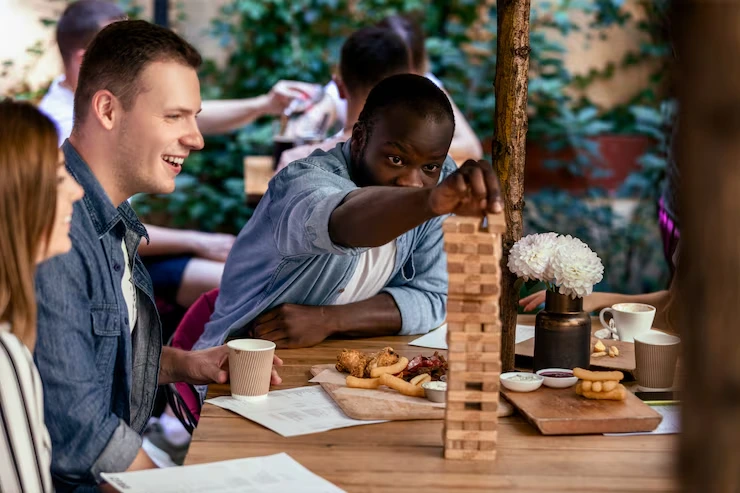
Designing, equipping, staffing and opening a consumer-facing food and beverage space from zero is the same discipline a pop-up, festival stand or long-run activation needs — just without the option to pack up at the end of the week.
Plenty of operators open their own sites, and the work is entirely learnable. What catches people out is order of operations and the compressed period before opening, where fit-out snagging, inspections, hiring and training all land in the same fortnight. Building the training window into the programme before it gets squeezed is the single most valuable planning decision.
The first site is a design project; the next ones are a replication project. That means writing the operating manual, recipe cards, layout drawings and training programme during the first build rather than reconstructing them a year later from memory. Sites two and three should be faster and cheaper only because the documentation exists — without it, each opening repeats the full cost of the first.
Feedback
“The supplier provided great service for today's event. The communication from the team was very effective and efficient. Also, the staff that turned up was on time despite the first time.”
A published review of Pearl Lemon Catering, a separate Pearl Lemon business — not a review of Pearl Lemon Experiences or this engagement. Read the supplier profiles on AddToEvent.
We design, staff, train and open food and beverage concepts from zero — the same discipline a long-run activation or stand needs. Tell us the format and the opening date.
Because the operating problem is identical: define an offer, specify equipment and layout to the service flow, then hire and train crew to hold the standard. A permanent build is that problem with no end date and no margin for error.
Concept and menu first, then equipment and layout, then staffing and training. Specifying equipment before the menu is settled is the most common and most expensive mistake in a new food and beverage site.
Yes. We have taken sites from empty to trading — coffee shops, matcha and boba concepts — and we apply the same operating model to temporary activations, stands and pop-ups.
Concept, then menu, then equipment specified to that menu, then layout designed around the service flow, then hiring and training before opening. Buying equipment first forces the menu to fit the machines, which permanently compromises service speed.
Training needs its own protected window before opening day, ahead of the fortnight where snagging and inspections collide. Opening with an untrained team produces early reviews the site then has to spend months recovering from.
Book a call or use the direct lines on this page. We scope the brief, the venue constraints and the dates, then come back with a staffing and delivery plan. Short lead times are normal for us — we have delivered activations in under a week.
Matcha concept (Pearl Lemon Group)

Boba and smoothie concept (Pearl Lemon Group)